
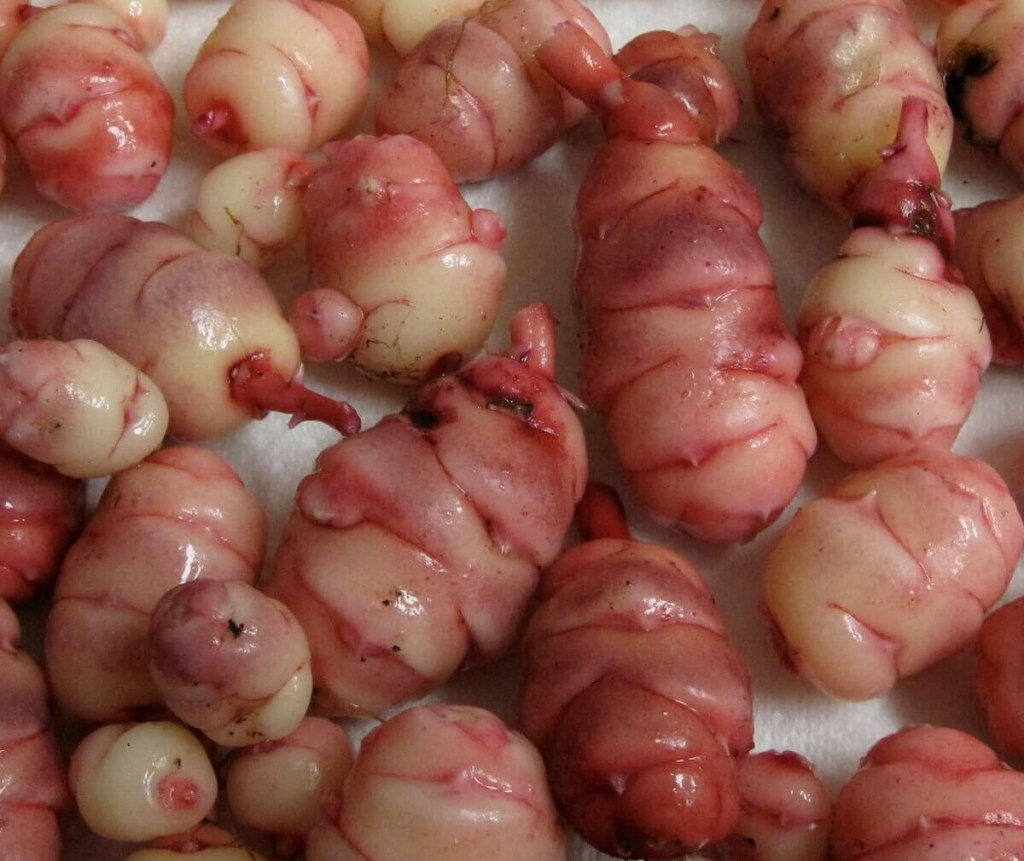
Oca tubers are rare to find outside South America and New Zealand. They are delicious! They taste tangy, sometimes sweet and lemony. They are used as a potato alternative, but can be eaten raw. The edible leaves taste like sour green apples. They are rich in nutrients and easy to grow. They are harvested after a hard frost.
- 200g oca, washed well, left unpeeled
- Oil for roasting, e.g. light olive, sunflower or rapeseed
- Salt & pepper
Method
- Preheat oven to 200°C/Gas 6.
- Cut any large oca into chunks so they’re all roughly the same size.
- Toss in just enough oil to coat and season with salt and pepper.
- Roast for 15 minutes for very small ones, 20-25 minutes or so for larger oca, until just tender when pierced with a knife.
Mashua tubers originate from South America. It is in the same family of nasturtiums. You can eat it raw or cook it. Used in Peruvian cooking. Here is a traditional Andean recipe for Mashua Soup.
Ingredients
- 1 kilo Mashua
- 5 cups water
- 3 cloves of garlic
- 2 onions
- 3 tablespoons oil
- 1 kilo potatoes
- 2 egg
- coriander
- Huacatay (Peruvian black mint)
- salt to taste
In a saucepan heat oil then add garlic and onion. Add 5 cups of water with two spoons of salt, chop and wash mashua, then pour into the pot that is boiling. Add the chopped potato, break two eggs into the soup, add cilantro and huacatay. You can add milk along with eggs.


Sunchokes
A Jerusalem artichoke which can be eaten raw and it tastes like water chestnuts (stir fries!). They are high in iron, magnesium, potassium and calcium. They are low in carbs and high in fibre. The flowers look like sunflowers, pollinators love them and they grow nice and tall (6-8ft). They are drought resistant and very easy to grow.
The tubers can also be cooked like potato.
They are harvested around November time. During the harvest year I chopped up the stalks to use as kindling.
 Earthed Up!