
A 2 part shortcourse to introduce forest gardening. Growing to meet human need in a diverse set-up.
Saturday 25 April and 16 May 2026, 10am-1pm.
At Dovehouse Fields Community Gardens, Lichfield.
What is forest gardening about?
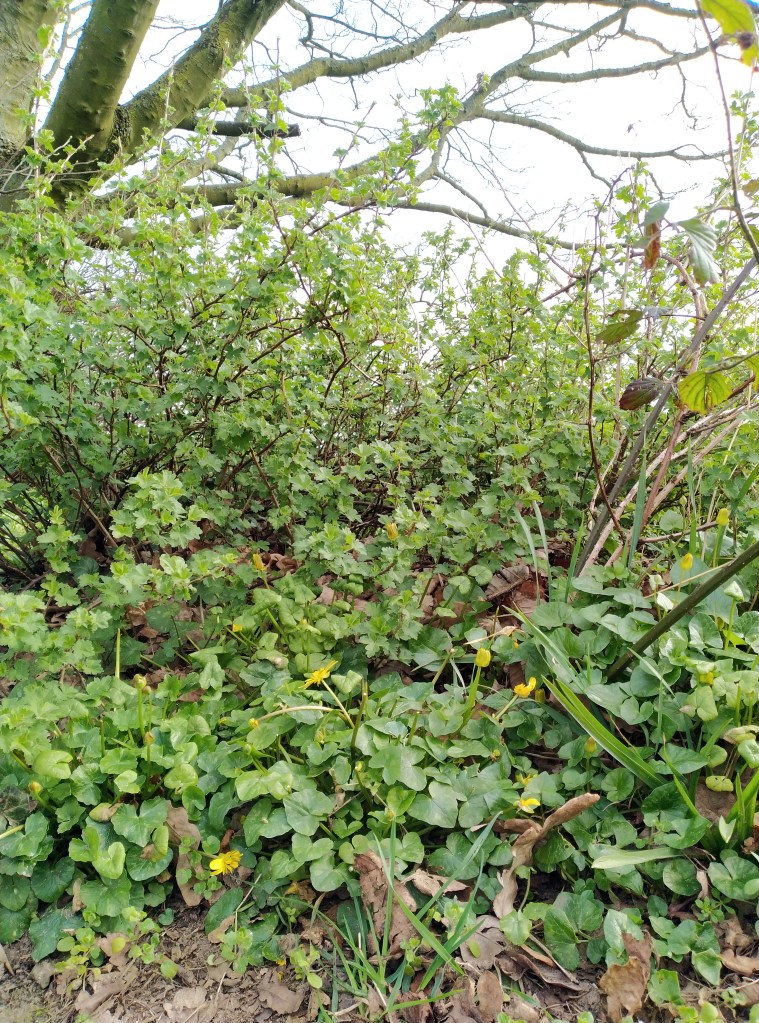
You can use the forest garden approach at different scales – from a garden bed to allotment or field.
Imagine trees, shrubs, herbs, all growing supportively together providing abundance for us in the form of food, medicine, fuel, fibre and more. Forest gardens are beautiful and build a living soil while providing habitats and food for wildlife.
This course will show you principles that you can apply in your context.
Grow like nature
Forest gardening mimics a natural woodland edge. It integrates plants at different heights, using 7 ‘layers’ from canopy down to roots. A garden as a forest, rather than a garden in a forest.
This an efficient way to create a garden that produces many yields, for much of the year. There is resilience in diversity of crops.
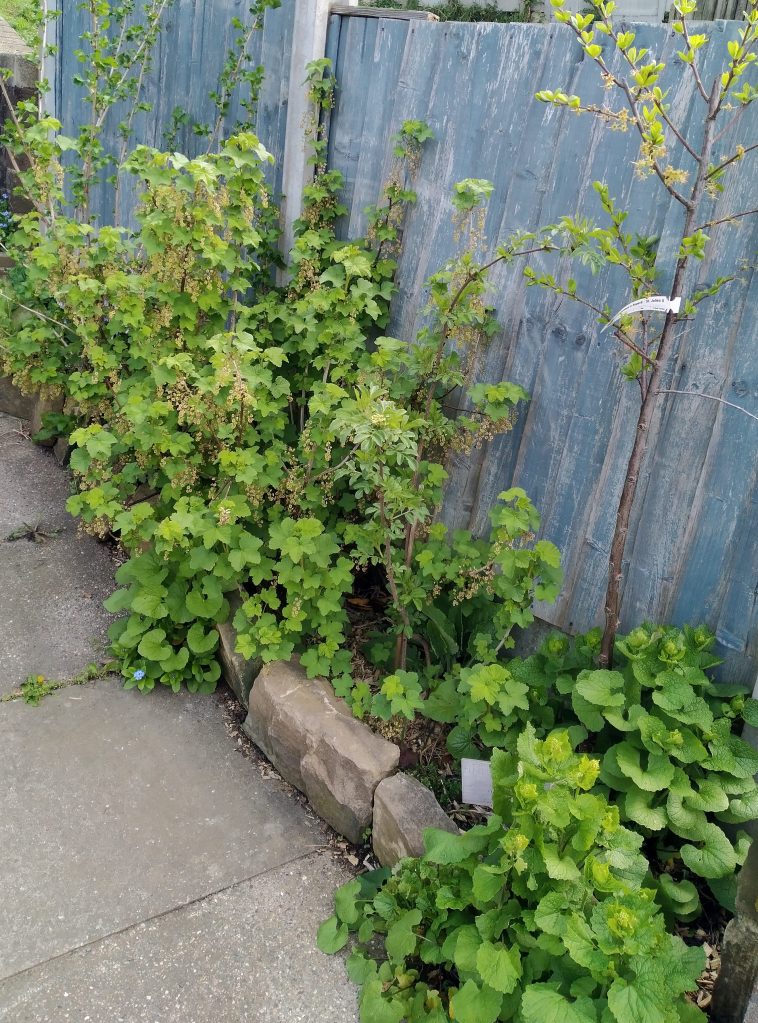
Typically, the plants grown are mostly hardy perennials – ones that are around every year. And there’s an emphasis on using all space, up, down and around.
We can design the forest garden to be productive towards meeting our needs. We can grow plants for food, drink, medicine, fuel, fibre, wildlife value and more.
In a forest garden, plants are grown in polycultures, in a community with the other plants. The gardener works on co-operation with the soil food web, wildlife, and the plants to create a garden of abundant yields.
About the learning
On the course, we will cover:
- Starting designing for a forest garden
- Observation – working with what you have and what works
- Plants, their roles and functions
- Ways to make a start a forest garden
The course is to be led by Ryan Sandford-Blackburn, who has been forest gardening for 12 years. He holds a permaculture design certificate.
Ryan has taught permaculture courses locally and online with the Permaculture Association (Britain); he worked as strategic communications coordinator there for nearly 8 years. He is a founding member of Earthed Up!.
Book your place
Places are limited.
Sliding scale £40-£100 for both days. Pay what you feel.
If cost is a barrier to your participation, please get in touch about bursary options.
Bring food to share for lunch afterwards if you like.
Where is it? Getting there
The garden is off Birmingham Road, Lichfield. Just under a small railway bridge.
What3Words: rate.worth.descended
See on Google Maps: https://maps.app.goo.gl/GtMuZvthUfR81L4X9
There are bus stops a short walk away, a 12 minute walk from Lichfield City train station, secure space to leave a bicycle.
Access statement
The garden has steps up to it and uneven grass and woodchip paths. ‘Babes in arms’ are welcome.
Why forest gardening?
- A natural approach to gardening
- Carbon sequestration
- Hyperlocal food supply
- Provides a varied diet
- Playspace
- A ‘backyard ecosystem’
A forest garden approach creates the opportunity to grow many plants. With many uses. Food, medicine, fuel, fibre, nectar and dye plants. To name just a few!
Cultures around the world have cultivated gardens in ways that resemble what we call a forest garden. Home Gardens in Kerala, ancient food forests in Morocco, the Maya tropical woodlands, the forests planted by First Nations people of the Pacific Northwest, the Hopi, and many others, documented and forgotten.
As a 3D, dynamic space, it’s really much easier and more enriching to experience a forest garden in person.
Watch videos about forest gardening
To book please fill in your details below and we will send you the payment details.


Thank you!
 Earthed Up!